Namaste, fellow travellers!
This is my first post about Nepal. To show you a bit of the culture of the country, this first post is going to be about symbolism.
If you think about Nepal, the first thing that might come up to your mind might be the Himalaya’s. But Nepal has much more than just a mountain range. It is filled with food, people and a rich history. This last one is the reason for the change of meaning on the Nepali flag (in the picture below).
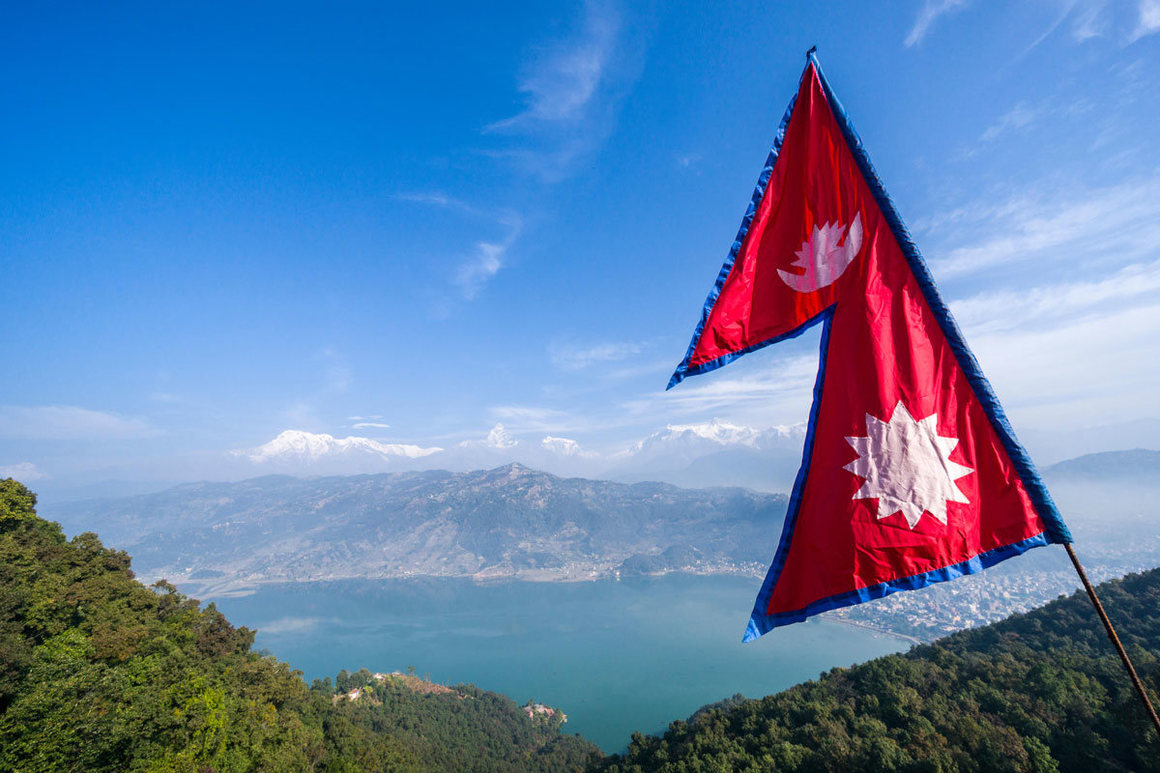
In the beginning, the two pennants represented the rival branches in the Rana dynasty which ruled Nepal until it became a federal republic. The moon represented the royal family and the sun one of the branches of the Rana family.
With the change from an autocratic monarchy to a democracy, and a civil war that ended in 2008, the symbolic meaning of the different parts of the flag changed.
If we look at the colours of the flag, the blue border represents peace and harmony and the red, which is also the national colour, represents the bravery of Nepalese’s spirit (these two meanings, I believe, are related to the devastating civil war). The form of the flag, the moon and the sun meanings in relation with the Rana dynasty disappeared with the change of the countries government to a democracy, giving way to new interpretations. For example, the form of the flag relates to the Himalayan mountains while the moon to the nice weather in the Himalaya’s and the sun resembles the warmer temperatures of the lower areas in Nepal.
This shows how symbols meanings are not static but they change with time depending on what people believe and relate them to.
Cheers!
 TRAVEL TO LIVE